
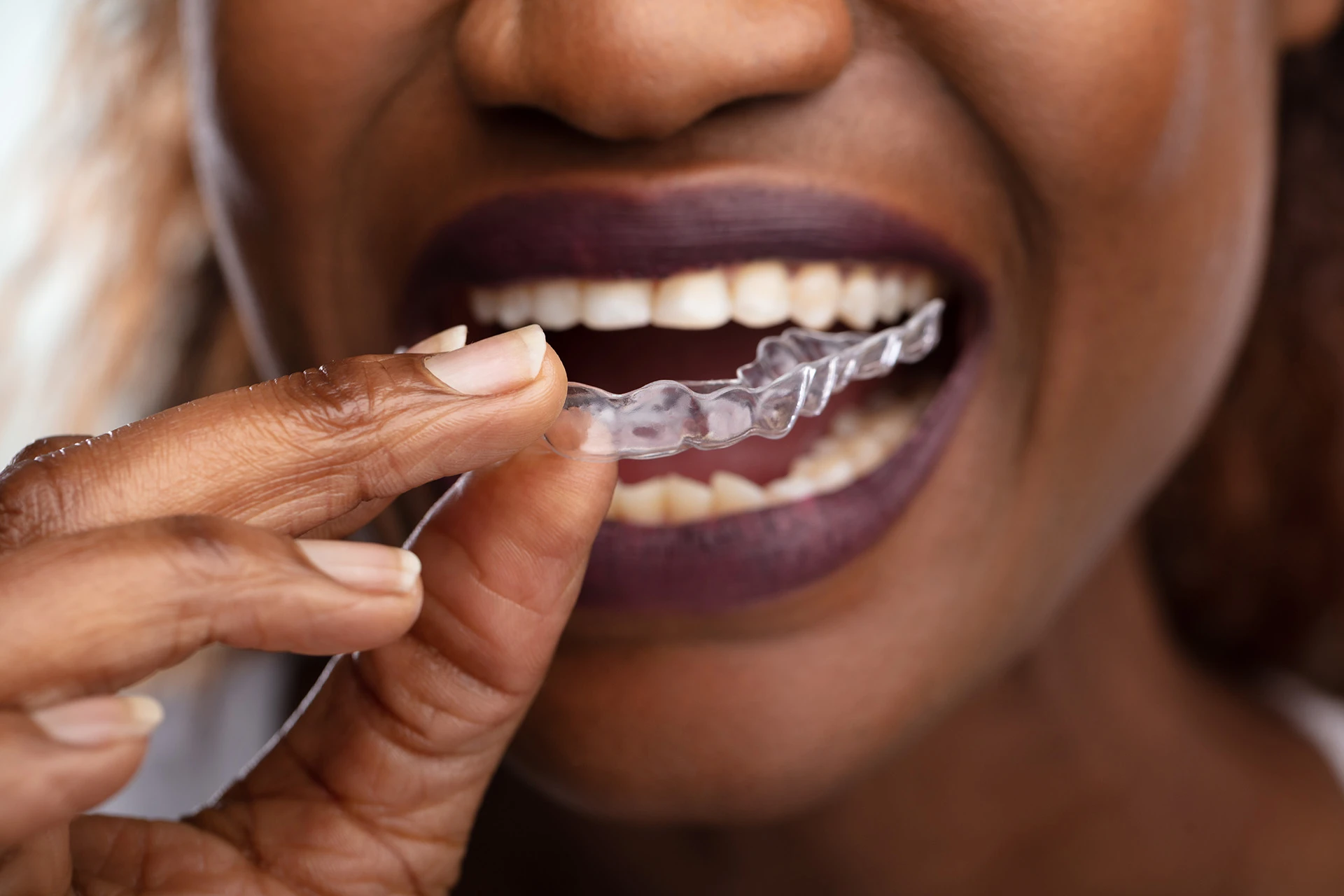
Choosing a way to straighten your teeth is a significant step toward improving your smile. One method is Invisalign, which uses a series of custom-made, clear plastic aligners that gradually shift your teeth into their desired position over time. Understanding the differences between this system and traditional braces will help you have a more informed discussion. Here is more information about these two options:
Invisalign Benefits
Invisalign aligners are clear, offering a discreet way to straighten teeth. It allows them to undergo treatment without the noticeable look of metal brackets and wires. The aligners are typically made from a smooth plastic material, which reduces the potential for irritation to the cheeks and gums that is sometimes associated with traditional braces.
Another practical aspect of Invisalign is its removability. You can take the aligners out for eating, drinking anything other than water, brushing, and flossing. This functionality means you have no food restrictions during your treatment.
You can maintain your routine, which helps keep your teeth and gums healthy throughout the process. The clear design of Invisalign aligners makes them a discreet option for teeth straightening, which can be particularly appealing for adults and teens. With consistent use as directed by your orthodontist, Invisalign can effectively and efficiently align your teeth.
Braces Benefits
Traditional braces have been a reliable solution for many years. They are highly effective at correcting a wide range of dental issues, from simple to complex. Braces consist of brackets attached to the teeth and connected by an archwire. Your orthodontist can adjust them periodically to guide the teeth into proper alignment.
Because they are fixed in place, braces work continuously, 24 hours a day. This constant pressure yields predictable and efficient results for a wide range of orthodontic problems. Patients do not need to remember to wear their appliance or misplace it. For individuals with complex bite issues or severe crowding, braces may provide the comprehensive control required to achieve the desired outcome.
Severity Level
The level of correction you need plays a large part in determining the best treatment option. Invisalign is suitable for mild to moderate cases of crowding, spacing, and some bite irregularities. Advances in technology have expanded the range of issues it can address.
Traditional braces are capable of handling more severe and complex orthodontic cases. They provide the force necessary to correct significant bite problems, misalignment of the teeth when the jaws are closed, and major tooth rotations. An orthodontist can assess your specific situation and recommend the treatment that aligns with your clinical needs.
Flexibility Reasons
The ability to remove your orthodontic appliance is a significant advantage of Invisalign over braces. With Invisalign, you have the flexibility to take out your aligners for meals and oral hygiene. This freedom allows you to eat whatever you like and brush and floss with ease.
Get Invisalign or Braces Today
Deciding between Invisalign and traditional braces depends on your orthodontic needs, lifestyle, and personal preferences. Both are effective in achieving a straighter smile when used under the guidance of a professional. The most effective way to determine your path forward is to speak with an expert. Schedule a consultation with your orthodontist to discuss your goals and determine the ideal treatment for you.
Leave a Reply