
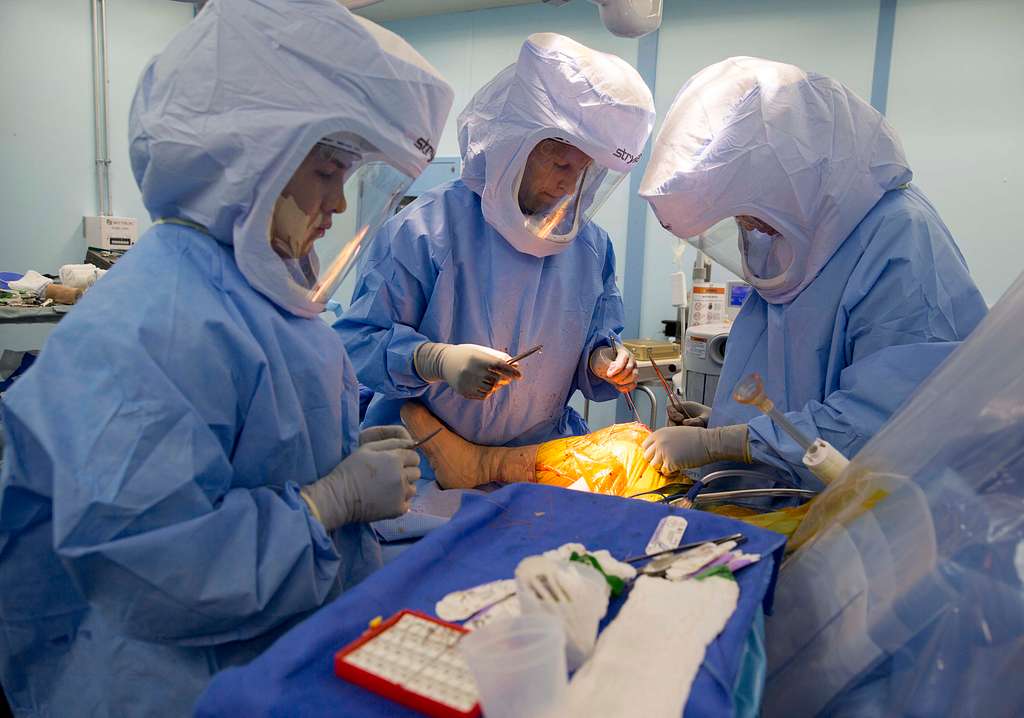
Orthopedics includes surgical techniques used to treat injuries, joint problems, bone conditions, and other musculoskeletal concerns. Depending on the condition, orthopedic procedures involve minimally invasive methods or other surgical approaches. Here are some common surgical techniques used in orthopedics:
Using Arthroscopic Surgery
Arthroscopic surgery is a minimally invasive technique in orthopedics for examining and treating joints. During the procedure, the surgeon makes a few small incisions and inserts an arthroscope, which is a thin tube with a light and camera. The camera sends images to a monitor, and the surgeon uses these images to guide small instruments. Surgeons often perform arthroscopy on the knee, shoulder, hip, and wrist, and they may use it when a patient has torn cartilage, loose bone fragments, or an inflamed joint lining.
Replacing Damaged Joints
Joint replacement involves removing damaged bone and cartilage and installing artificial components. These components are made of metal, plastic, or ceramic and mimic the shape and motion of a natural joint. Surgeons may recommend this procedure when arthritis or injury severely limits joint function. Here are several joints that qualify for replacement in orthopedics:
- Hip replacement: The surgeon replaces the ball-and-socket joint with a prosthetic ball, stem, and cup.
- Knee replacement: The surgeon resurfaces the ends of the thigh and shin bones and may also resurface the kneecap.
- Shoulder replacement: The surgeon replaces the head of the upper arm bone and, in some cases, the socket.
- Ankle replacement: The surgeon replaces the damaged surfaces of the ankle joint as an alternative to fusing the bones.
Repairing Soft Tissue and Nerves
Soft tissues include tendons, ligaments, muscles, and cartilage. Tendons connect muscles to bones, and ligaments connect bones to other bones. When these tissues tear, surgeons may reattach them to the bone with sutures or small anchors. Some tears cannot heal with direct repair, so the surgeon may perform a reconstruction using a graft from the patient or a donor. Anterior cruciate ligament (ACL) reconstruction replaces a torn knee ligament with a tendon graft.
Nerve procedures address compression or injury to nerves in the arms, legs, and hands. Procedures reconnect severed nerves, or they use nerve grafts to bridge a gap. Nerve tissue regenerates slowly, and recovery may take months while the nerve regrows along its path.
Performing Advanced Spine Procedures
Spine surgery in orthopedics addresses conditions affecting the vertebrae, discs, and spinal nerves. These conditions include herniated discs, spinal stenosis, and spinal instability, and they may cause back pain, numbness, or weakness. Surgeons generally recommend spine surgery after nonsurgical treatments, such as physical therapy or medication, have not provided enough relief.
Performing Spinal Fusion
Spinal fusion joins two or more vertebrae into one solid bone. The surgeon places bone graft material between the vertebrae, which prompts the bones to grow together. Screws, rods, or plates hold the vertebrae in place, and the bones fuse over several months. Fusion limits motion at the treated segment, but it aims to stabilize a section of the spine that moves abnormally.
Utilizing Decompression and Disc Replacement
Decompression surgery relieves pressure on the spinal cord or nerves. In a laminectomy, the surgeon removes part of the vertebra that covers the spinal canal. A discectomy removes the damaged portion of a herniated disc, and an artificial disc replacement swaps the entire disc for a mechanical device.
Learn More About Orthopedics Today
Orthopedics offers a range of surgical techniques for bone, joint, soft tissue, nerve, and spine conditions. Arthroscopy treats joints through small incisions, and joint replacement substitutes damaged surfaces with artificial parts. Soft tissue and nerve repairs reconnect damaged structures, and spine procedures stabilize vertebrae or relieve pressure on nerves. To learn more about orthopedics, contact a qualified orthopedic surgeon near you to schedule your appointment today.